Phase 1 Flying–26.2 hours

Had a great flight this morning; no squawks and my airspeed indicator problem seems to be mostly fixed.  It’s reading within 5 mph of my actual airspeed which is close enough. No, really.

For the first time in weeks the air was truly calm so I took the opportunity to fly a sawtooth pattern of climbs and descents.  I’ll enter that data into a spreadsheet and plot it.  I’ll be able to use the data plots to find the aircraft’s Vx and Vy speeds.  Vx is the best angle of climb, this is the speed that gets you the most altitude over a given distance.  Vy is the best rate of climb, this is the speed that will give you the most altitude over the shortest time span.  I have a few more flights to gather the data I need tabulated.  Determining Vx and Vy is the last of the formal flight tests I need to conduct.  After that I’m just flying off the time until I get to 40 hours.

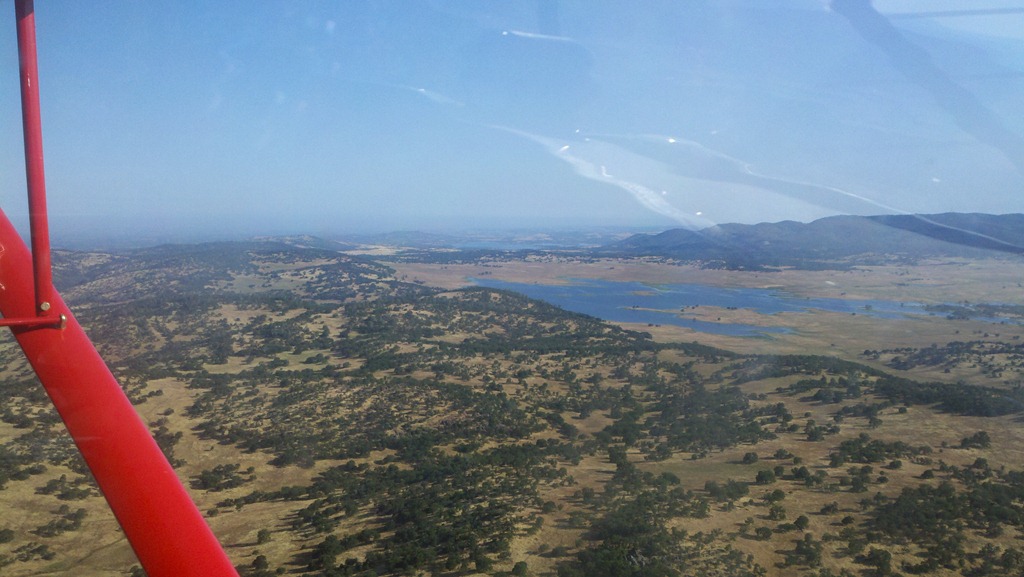
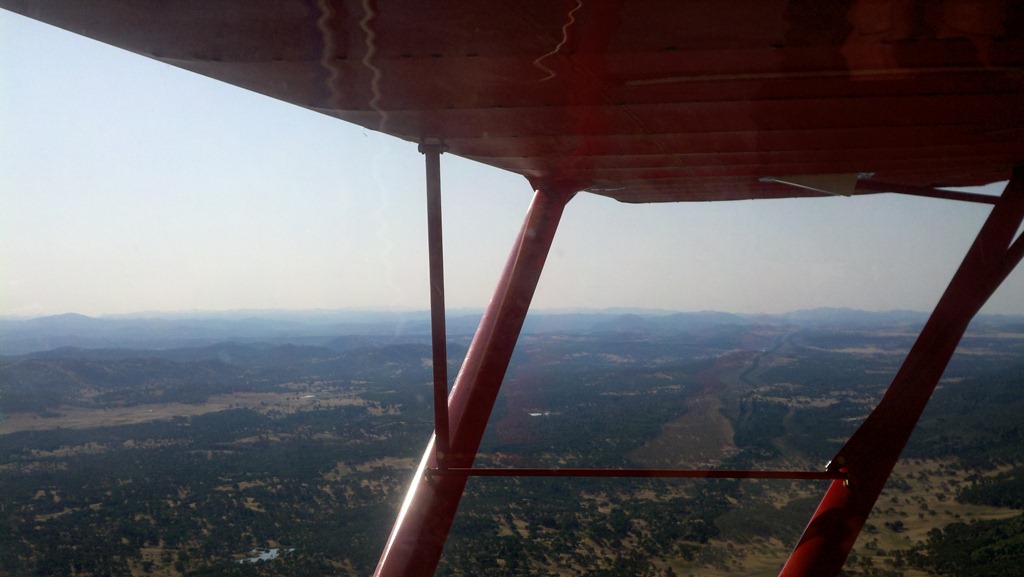
Here are a couple of pictures from this morning’s flight…

2011-05-30_08-19-43_912


2011-05-30_08-19-57_37

Phase 1 Flight Testing–18.9 hours

I had three squawks remaining on the plane and now am down to one.  The biggest squawk was my charging system.  This was repaired by replacing my regulator/rectifier which I fried by not knowing how to properly operate my engine.  The second biggest squawk is that my airspeed indicator indicates a higher airspeed than I’m actually travelling.  I emailed technical support and they suggested shortening the length of my pitot tube (this is the probe that stick out in front of the airplane and is connected to the airspeed indicator).  I shortened the pitot tube by almost half and now I am seeing normal airspeed indications.  I didn’t think it would help much but I’m pleasantly surprised.

The last squawk will be much easier to fix.  The airplane shows a tendency to turn to the left which forces me to hold a little left rudder when I’m flying.  The fix for this is easy, to find a length of tubing that I can attach to the left side trailing edge of my rudder.  I just need to find the right length of tubing and attach it.

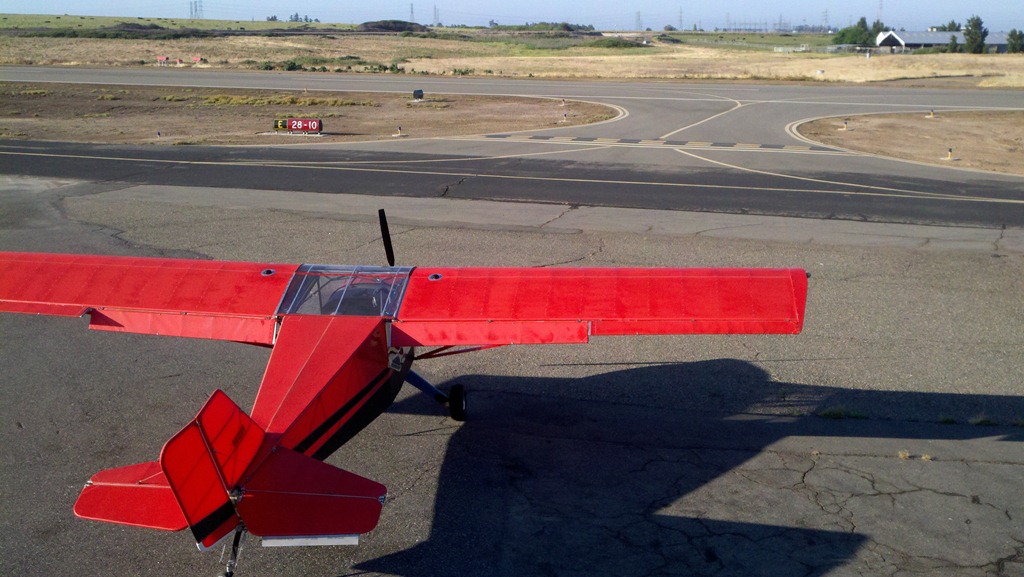
2011-05-11_07-30-38_689

Battery Charging Problem Fixed

I’ve been battling a battery charging gremlin since early on in my phase 1 flight testing.  Initially I thought it was a blown fuse.  It turns out the blown fuse was not the cause but a symptom of the bigger problem.  The bigger problem is that I didn’t read one line in my Rotax engine manual which stated that the voltage regulator should never be turned off while the engine is running.  Since on a Lycoming you can switch off the alternator field switch at will, I assumed you could do the same on a Rotax.  Not so.  The manual clearly states that if you do this you will damage the voltage regulator.

Well, I did, and I did.  So I ordered a replacement voltage regulator and installed it.  I check the voltage today and there is ample voltage now to charge my battery.  I’ll monitor voltage closely on the next few flights but I’m confident I’ve corrected the problem.

HDR effect on photos

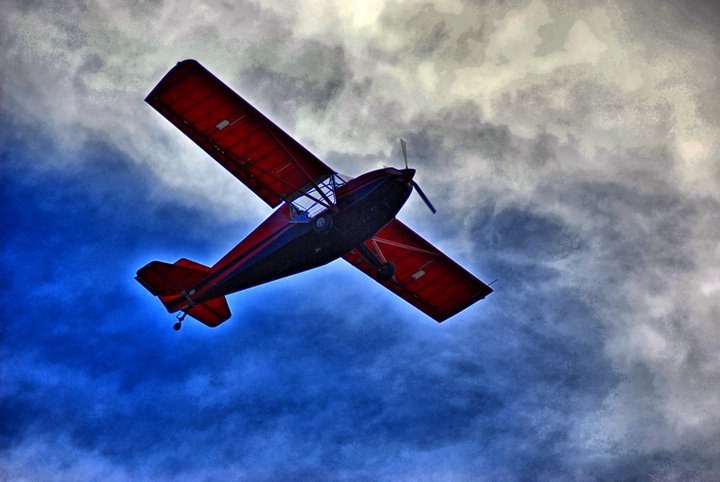
HDR stands for High Dynamic Range and is basically a way to digitally adjust the light levels between the lightest portions of a photo and the darkest portions.  In normal use it makes a photo look more realistic.  It can also be used to create artistic effects such as in the following photos, take and enhanced by my friend Emmet Welch.

205711_1996592758286_1347496881_32285080_3864486_n


This next one is my favorite:

217038_1996592838288_1347496881_32285081_2873719_n

Phase I Flying–17.5 hours

When for a short flight this morning to check the charging voltage coming from my alternator.  My digital multi-meter showed that the voltage at the battery was only 12.2 volts DC.  I should have seen right around 14 volts DC.  So I enjoy another 45 minutes or so of sight-seeing before returning to Oakdale to start troubleshooting.

I got back to the hangar and pulled the cowl.  My first check hit paydirt.  I found that the fuse between my voltage regulator and the battery was blown!  I drove down to Kragen Spruce and Specialty and purchased a few more 30A fuses.  I’ll replace the fuse tomorrow and recheck the voltage.

Phase 1 Flight Testing–16.5 hours

I had the day off of work so I decided to do more test flying.  What else?  Today’s flight went very well.  The only squawk is that my battery went dead again in flight.  This causes me to lose my tachometer and therefore I can’t do some portions of my testing.  So because of the dead battery I had to head back early.

I did do some stall testing today.  The results of which tell me I need to check out my airspeed indicator.  The results are, VS0 = 38 MPH, and VS1 = 50 MPH.  ??!  That’s a huge differential and means my airspeed indicator is not accurate at higher airspeeds.  But then I already knew that, this just confirms it.

By the way, for my non-airplane friends, VS0 is the stall speed of the airplane with full flaps, VS1 is the stall speed of the airplane without flaps.

I also took this opportunity to finish spraying a polyurethane UV blocker on my wings.  This will help them last longer.  That took most of the day but now my wings are water tight and protected from the sun.

Phase I Flying–15.0 hours

Flew 1.4 hours this morning.  The weather is changing (again) so it was pretty bumpy.  Flew over the Oakdale Rodeo Parade and then around the area.  Practiced a few take-offs and landings back at Oakdale.  Decided that this morning’s fun was getting to be too much work so called it a day.

Phase I flight testing–13.6 hours

Yesterday I check my flight controls to see if I could locate the source of the aileron bumping I’m experiencing.  I couldn’t find anything loose or interfering in the aileron controls.  I tightened up the aileron cables that go from the stick to the cockpit overhead bellcrank as a precaution.  I also checked the rigging of the ailerons themselves.  I found that the left aileron was set a little high so  I adjusted the aileron to the correct angle.  Weather was not the best yesterday so I elected not to do any flight testing.

This afternoon it was a little windy but I decided that the winds met my minimums.  I took off and it was definitely a wild ride for the first 1000 feet of altitude but everything smoothed out to within acceptable bumpage.  I flew northwest towards Farmington.  As I was flying along I noticed my tachometer was swinging between normal RPM indications of about 5200 RPM to well over 6500 RPM.  I could hear that the engine was not changing pitch so I knew it had to be the gauge.  As I was mulling which gauge to switch to in my mind I noticed that I could no longer see the display on the radio.  Also the GPS started displaying it’s loss of power countdown.  I also recalled that on my last flight another pilot reported my radio as scratchy.  Hmmm… That helped me narrow the problem down to my battery not having enough of a charge to excite the alternator.  I think.  The rotax engine is a different animal than I’m used to.

I got back to the airport and the winds were really gusting at that point.  I carefully checked for other traffic (since I couldn’t use the radio) and entered the pattern.  Everything went well until I actually tried to land.  Then I found that I had developed a new landing technique.  This technique involved letting the upwind main wheel touch down, and then pick it back up.  Then letting the downwind main wheel touch down, and pick it back up.  Then let both wheels touch simultaneously, and again pick them back up.  THEN drop and pick back up all 3 wheels in rapid succession all the while maintaining poor directional control.  The problem?  I was distracted by the loss of power and failed to adequately control the airplane.  Did I break or bend anything?  No.  It was just one of those landings that made me SO happy the airport was deserted.  God is indeed good!

So two things to address before my next flight: the battery charging system, and my wind minimums.   God bless and happy landings.

Flap gremlin located

I was able to locate the source of my flap malfunction.  The main cable that runs from my flap lever to where the cable splits into two is secured to a fitting on bulkhead behind the pilot’s seat.  The cable should have been safety wired to this fitting and was not.  This allowed the cable to slip out of the fitting.  I made sure the cable was securely seated into the fitting and then safety wired it in place.  This particular malfunction will NOT happen again.

Phase I flight testing – 11.2 hours

Tonight I took advantage of a break in the weather to go for a quick late afternoon flight.  The conditions were perfect, a broken cloud layer at 7000 feet, mild temperatures, dappled sunlight shinning on the emerald green valley floor, and perfectly smooth air.  I practiced more take-offs and landings and just flew around the valley enjoying the scenery.  I should have been performing flight testing but I just couldn’t resist playing tourist instead.

I had a minor incident this evening as I was making the last landing of the day.  I was on short final, approximately 60 MPH and I pulled in the last notch of flaps.  About 5 seconds later I heard a loud noise, like a bang or pop, and then both flaps retracted themselves.  The flap lever was still in the fully deployed position in the last notch.  After I landed I was able to push the flap lever back down.  As I did so I heard some pops that sounded like metal threads slipping.  I examined the rod ends and everything looked okay.  I worked the flap handle again and everything seemed to work normally.  I fully deployed the flaps again and was not able to duplicate the problem by pushing up on the flaps manually.  I’m going to give the flap push-pull cables a more thorough examination tomorrow when the light is better.

I’ve got an email into the technical support folks at Rans to see if they have any ideas.