Phase 1 Flying–34 hours

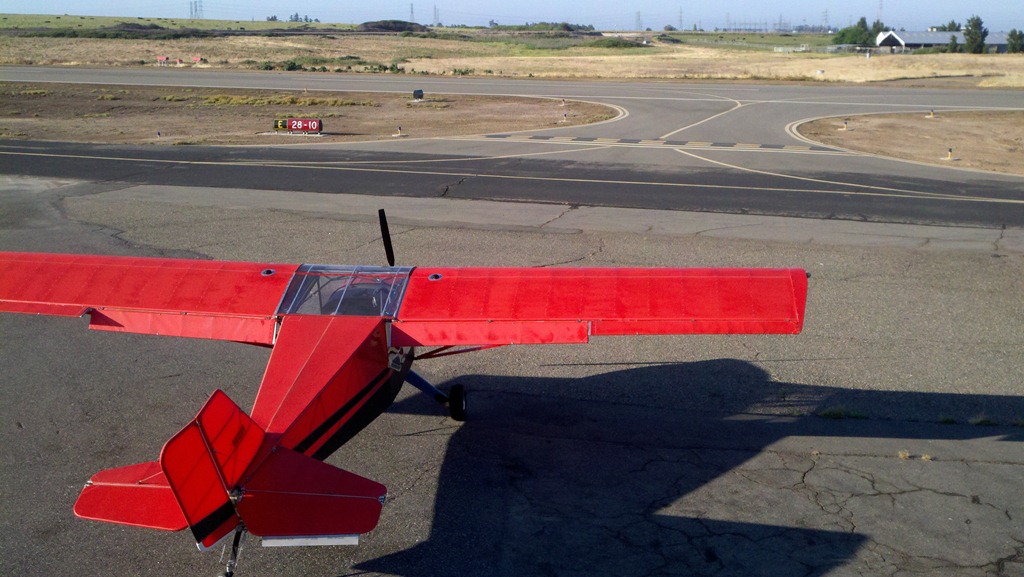
Had a great flight this morning.  The air was smooth as glass.  Today I calibrated my Lift Reserve Indicator.  It’s not completely accurate yet but it’s close enough.  The LRI can be thought of as either an angle of attack indicator or a an airspeed indicator that is extremely accurate at low speeds.  The instrument is connected to a probe that has two inputs which ram air enters at two different angles.  The LRI instrument compares the two pressures on the two ports and moves a needle accordingly.  You calibrate the probe by changing the angle at which it protrudes below the wing, thus altering the angle at which the air hits the two ports.

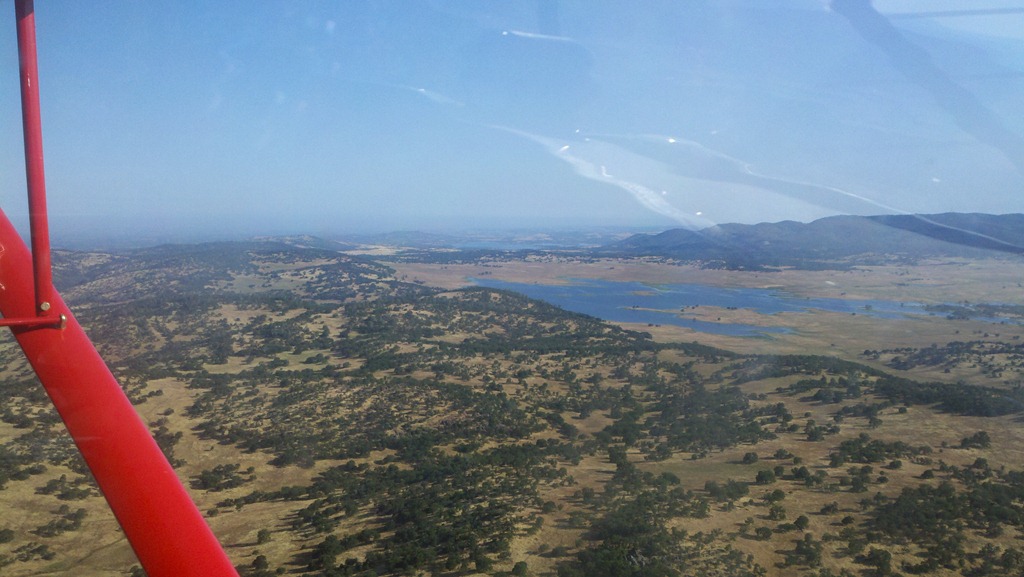
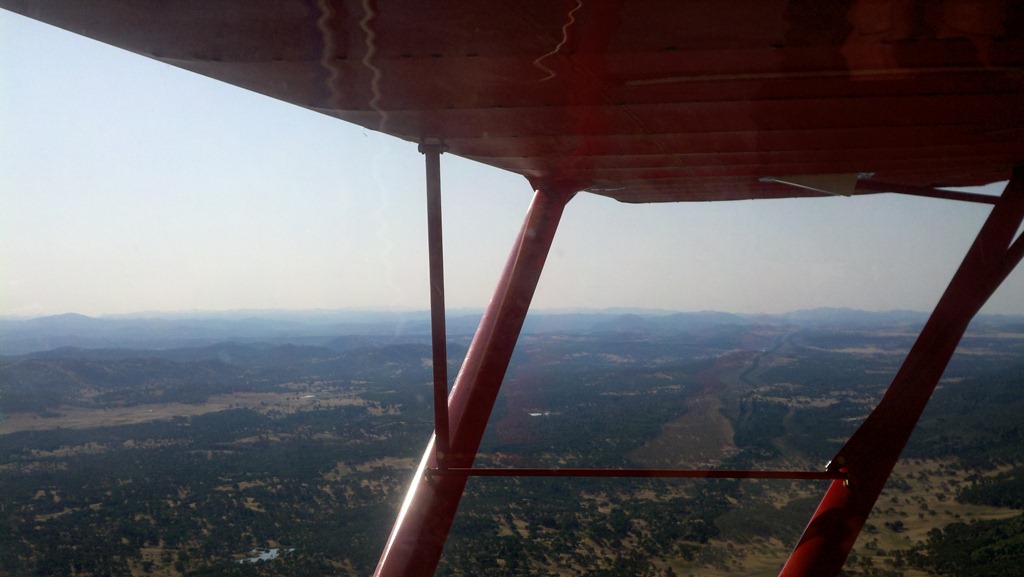
I also took the opportunity to do some pre-Fourth of July sight seeing.  Here are a few shots of Lake Don Pedro from this morning’s flight.


Only 6 more hours and I’m set to carry passengers, and leave my test area!  Oshkosh here I come!

Phase 1 flying–30 hours

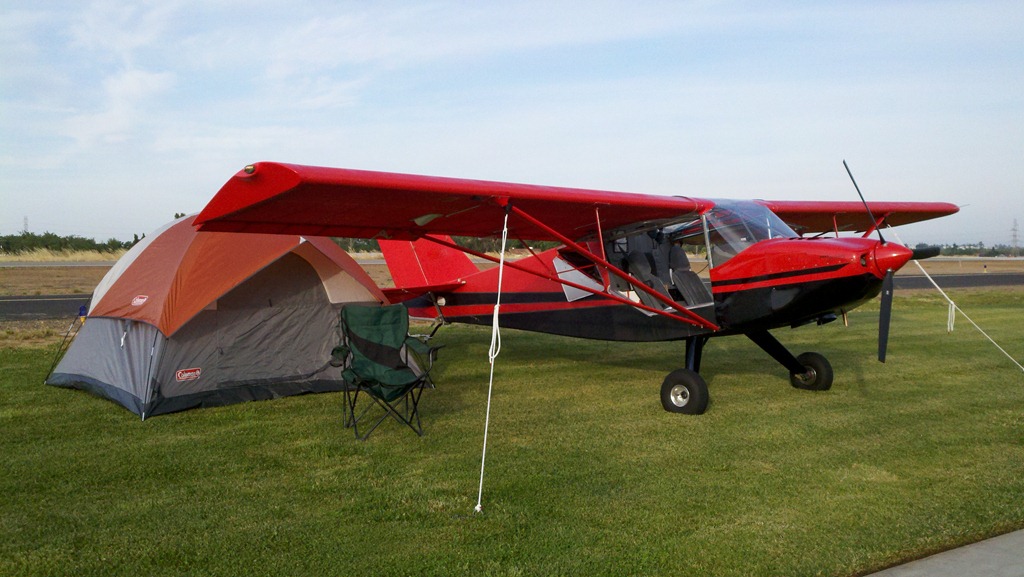
This morning’s flight was fun.  I’m loading up the plane and getting used to how it handles when heavy.  To do this I decided to load up all my camping gear.  Of course, it has to be out of the plane before you can load it inside the plane.  So I went down to a grassy spot on my airport and set up camp.

2011-06-11_07-14-30_506


This also gave me a chance to test the tie-down anchors I made this week.  I’d like longer stakes, these are only 12 inches, I’d like 14 inches.  When in actual use the stakes would be driven all the way in, as this was only a test I left them sitting proud.

2011-06-11_07-15-17_459


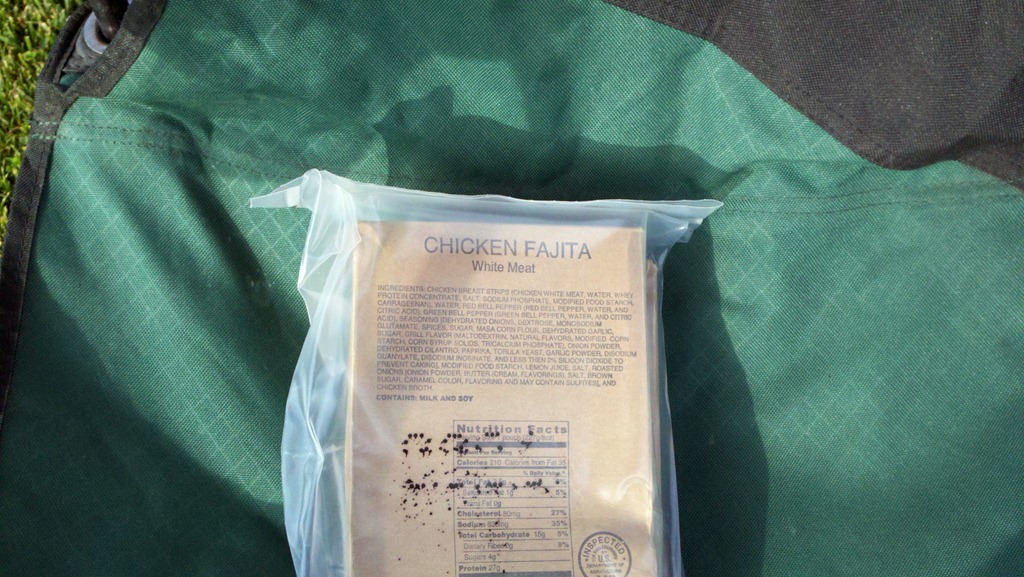
After a hard day of air camping, what’s for dinner?  MRE’s!!

2011-06-11_07-16-30_615


And there’s plenty more where that came from!

2011-06-11_08-10-28_919


I’m also bringing a couple of items along for safety.  One is a breakout tool to help with egress from the cockpit should the doors become jammed.  The other is my Spot Satellite GPS Messenger.  This device updates a web page with real time position updates.

2011-06-11_08-09-52_632011-06-11_08-08-55_718


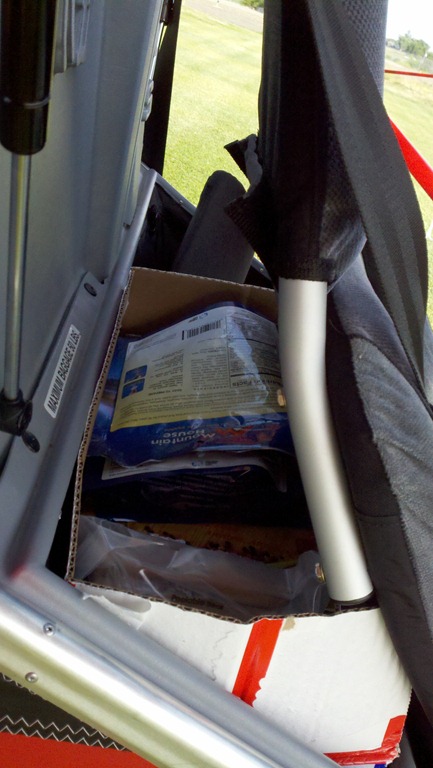
Hard to believe most of this stuff will fit into this small plane.

2011-06-11_07-15-51_635


Now all I have to do is pack my clothes, put in some gasoline and off I go!

The XM WX Aviator Saga

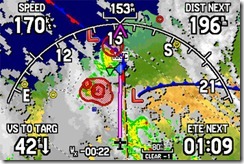
About 6 months ago I purchased a portable GPS system for my airplane.  It’s a Garmin GPSMap 396.  No longer sold by Garmin it’s a pretty good value on the used market.  One of the many features this device offers is in-flight weather depiction on the navigation map the unit displays.  So you not only know where you are on the planet, you also know what the weather looks like 500 miles down the road.  The weather is delivered via the XM satellite radio network.  This means you can also listen to their audio channels, a great boredom fighter.
pt-GPSMAP396Large03

This past weekend I finally decided it was time to subscribe to the service and start getting familiar with the weather functions.  This way I can be prepared for my trip in late July, I’ll already know how to use the device to view and fly around the weather.  I logged onto their website and ordered an audio subscription as well as their weather data product.  It was all automated and very easy.  The audio channels showed up immediately but the weather screen kept showing that I had no subscription for weather.  Hmmm… Maybe it just takes a while.

I waited a couple of days and still no weather.  I called SiriusXM listener care and they assured me that sending a refresh signal would clear everything up.  It did not.  The next day I called back and spent more time on the phone with them.  After about 45 minutes they assured me that in one hour weather would absolutely show up on my device.  It did not.

Okay, something’s wrong here.  Time to break down and read the manual.  I noted in the manual that came with the XM radio that I need to order the XM Aviator subscription.  I did!  Didn’t I??  I checked and… no, I didn’t.  I ordered the NavData subscription which provides weather data to select automobiles.

I called back again and proceeded to explain that I had ordered the wrong subscription and would like to change it.  After a lot of careful checking the friendly representative told me I would have to talk to their account department and that she would transfer my call there right away.  I thanked her.  After a short delay I was connected to ‘Dan in Marine systems’.  I explained the situation to Dan.  Dan said he couldn’t help me and that I would have to talk to Online Sales.  He unceremoniously said “hang on” and then transferred me. 

I explained my situation to the rep and asked if I could change my subscription.  It took about 15 minutes to explain everything to her but she finally got it and changed my weather subscription to the correct one.  But, she said I would not be able to receive audio channels anymore.   I told her that the website said I could get both weather and audio channels and that’s really what I wanted.  She told me she’d check into a few things.  After about 5 minutes of her checking I suddenly heard ‘Dan in marine systems.”

I told Dan it was me again and that I really didn’t know why I was suddenly talking to him again.  He asked for my radio serial number.  I told him that I was waiting for the other rep to gather some info and let me know if I could get audio channels with weather subscription.  Suddenly we were disconnected.  I don’t want to accused Dan of hanging up on my but I am suspicious.

A different phone number was listed on the XM Weather website so I called that number.  I told the rep who answered that I need to activate my weather subscription and oh, could I add audio to that?  Sure, he said and took care of it on the spot.  He told me to wait 40 minutes and turn on the radio.  I did and there was my weather and my audio!

All’s well that ends well but overall a very disappointing customer service experience.

Phase 1 Flying–26.2 hours

Had a great flight this morning; no squawks and my airspeed indicator problem seems to be mostly fixed.  It’s reading within 5 mph of my actual airspeed which is close enough. No, really.

For the first time in weeks the air was truly calm so I took the opportunity to fly a sawtooth pattern of climbs and descents.  I’ll enter that data into a spreadsheet and plot it.  I’ll be able to use the data plots to find the aircraft’s Vx and Vy speeds.  Vx is the best angle of climb, this is the speed that gets you the most altitude over a given distance.  Vy is the best rate of climb, this is the speed that will give you the most altitude over the shortest time span.  I have a few more flights to gather the data I need tabulated.  Determining Vx and Vy is the last of the formal flight tests I need to conduct.  After that I’m just flying off the time until I get to 40 hours.

Here are a couple of pictures from this morning’s flight…

2011-05-30_08-19-43_912


2011-05-30_08-19-57_37

Phase 1 Flight Testing–18.9 hours

I had three squawks remaining on the plane and now am down to one.  The biggest squawk was my charging system.  This was repaired by replacing my regulator/rectifier which I fried by not knowing how to properly operate my engine.  The second biggest squawk is that my airspeed indicator indicates a higher airspeed than I’m actually travelling.  I emailed technical support and they suggested shortening the length of my pitot tube (this is the probe that stick out in front of the airplane and is connected to the airspeed indicator).  I shortened the pitot tube by almost half and now I am seeing normal airspeed indications.  I didn’t think it would help much but I’m pleasantly surprised.

The last squawk will be much easier to fix.  The airplane shows a tendency to turn to the left which forces me to hold a little left rudder when I’m flying.  The fix for this is easy, to find a length of tubing that I can attach to the left side trailing edge of my rudder.  I just need to find the right length of tubing and attach it.

2011-05-11_07-30-38_689

Battery Charging Problem Fixed

I’ve been battling a battery charging gremlin since early on in my phase 1 flight testing.  Initially I thought it was a blown fuse.  It turns out the blown fuse was not the cause but a symptom of the bigger problem.  The bigger problem is that I didn’t read one line in my Rotax engine manual which stated that the voltage regulator should never be turned off while the engine is running.  Since on a Lycoming you can switch off the alternator field switch at will, I assumed you could do the same on a Rotax.  Not so.  The manual clearly states that if you do this you will damage the voltage regulator.

Well, I did, and I did.  So I ordered a replacement voltage regulator and installed it.  I check the voltage today and there is ample voltage now to charge my battery.  I’ll monitor voltage closely on the next few flights but I’m confident I’ve corrected the problem.

HDR effect on photos

HDR stands for High Dynamic Range and is basically a way to digitally adjust the light levels between the lightest portions of a photo and the darkest portions.  In normal use it makes a photo look more realistic.  It can also be used to create artistic effects such as in the following photos, take and enhanced by my friend Emmet Welch.

205711_1996592758286_1347496881_32285080_3864486_n


This next one is my favorite:

217038_1996592838288_1347496881_32285081_2873719_n

Phase I Flying–17.5 hours

When for a short flight this morning to check the charging voltage coming from my alternator.  My digital multi-meter showed that the voltage at the battery was only 12.2 volts DC.  I should have seen right around 14 volts DC.  So I enjoy another 45 minutes or so of sight-seeing before returning to Oakdale to start troubleshooting.

I got back to the hangar and pulled the cowl.  My first check hit paydirt.  I found that the fuse between my voltage regulator and the battery was blown!  I drove down to Kragen Spruce and Specialty and purchased a few more 30A fuses.  I’ll replace the fuse tomorrow and recheck the voltage.

Phase 1 Flight Testing–16.5 hours

I had the day off of work so I decided to do more test flying.  What else?  Today’s flight went very well.  The only squawk is that my battery went dead again in flight.  This causes me to lose my tachometer and therefore I can’t do some portions of my testing.  So because of the dead battery I had to head back early.

I did do some stall testing today.  The results of which tell me I need to check out my airspeed indicator.  The results are, VS0 = 38 MPH, and VS1 = 50 MPH.  ??!  That’s a huge differential and means my airspeed indicator is not accurate at higher airspeeds.  But then I already knew that, this just confirms it.

By the way, for my non-airplane friends, VS0 is the stall speed of the airplane with full flaps, VS1 is the stall speed of the airplane without flaps.

I also took this opportunity to finish spraying a polyurethane UV blocker on my wings.  This will help them last longer.  That took most of the day but now my wings are water tight and protected from the sun.

Phase I Flying–15.0 hours

Flew 1.4 hours this morning.  The weather is changing (again) so it was pretty bumpy.  Flew over the Oakdale Rodeo Parade and then around the area.  Practiced a few take-offs and landings back at Oakdale.  Decided that this morning’s fun was getting to be too much work so called it a day.